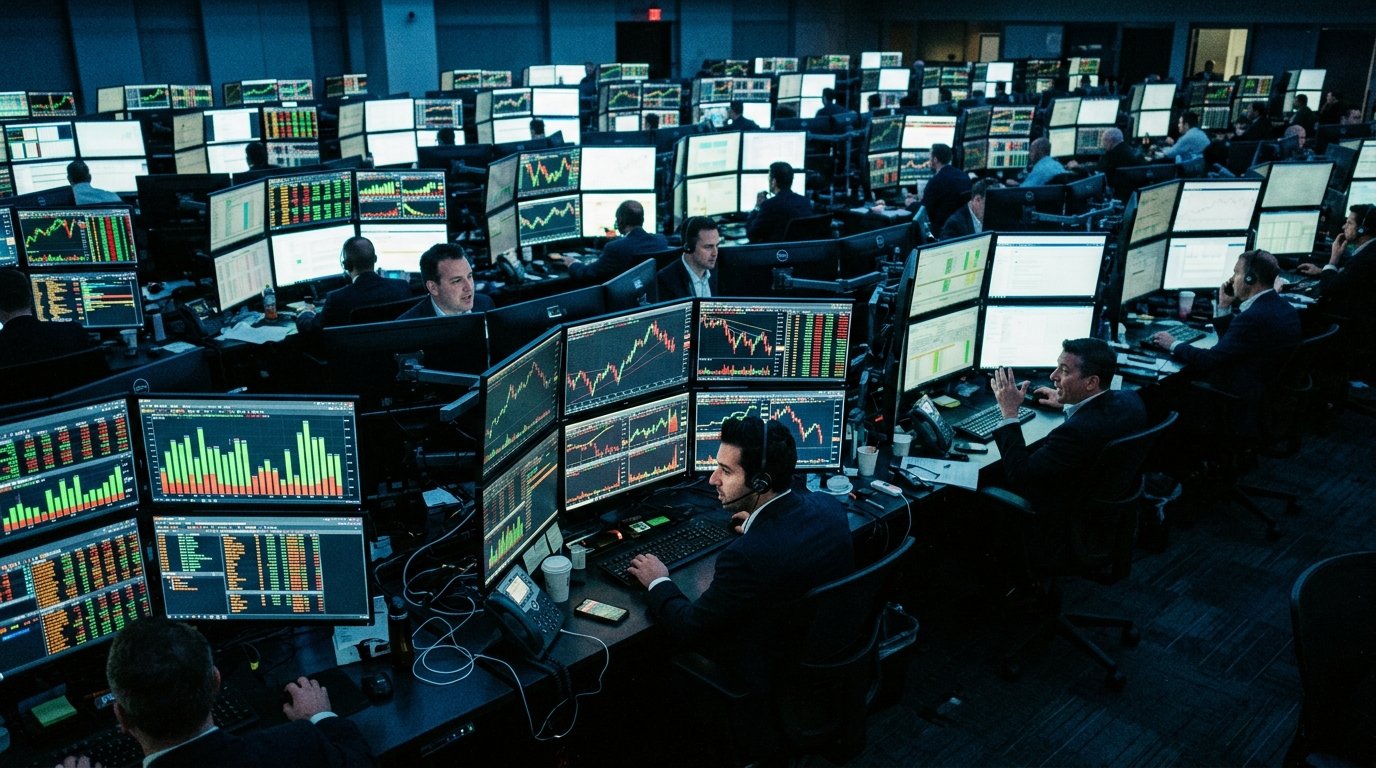
Over eighty percent of daily trading volume on the New York Stock Exchange and NASDAQ is executed by automated algorithms. The transition from legacy rule-based technical systems (such as simple moving average crossovers) to modern **Deep Reinforcement Learning (DRL)** and transformer-based time-series forecasting has fundamentally transformed how quantitative funds identify alpha in modern financial markets.
For individual quant developers and tech-forward investors, deploying automated trading models using Python libraries like Backtrader, PyAlgoTrade, and XGBoost allows you to eliminate emotional behavioral errors and systematically capture statistical mispricings 24 hours a day.
1. Core Machine Learning Architectures for Financial Alpha
Quantitative AI trading relies on three distinct computational paradigms:
- Gradient Boosted Decision Trees (XGBoost / LightGBM): Exceptional for tabular macroeconomic datasets, order book imbalances, and multi-factor price-to-earnings momentum ranking.
- Temporal Fusion Transformers (TFT): High-performance multi-horizon time-series models that interpret historical volatility regimes and interest rate shifts simultaneously.
- Deep Reinforcement Learning (PPO / SAC): Agents trained in simulated market environments that optimize a customized reward function (e.g. maximizing Sharpe Ratio while penalizing downside volatility).
2. Statistical Arbitrage & Market Neutrality
Rather than betting on directional market swings (hoping the S&P 500 goes up or down), institutional quant bots execute **Market Neutral Statistical Arbitrage (Pairs Trading)**:
• Identify two historically cointegrated equities (e.g. Visa vs. Mastercard, or ExxonMobil vs. Chevron).
• When the statistical price spread diverges beyond 2 standard deviations (Z-Score > 2.0), the AI bot automatically shorts the outperforming stock and buys the underperforming stock.
• When the spread mean-reverts to historical equilibrium, close both legs for a pure arbitrage profit regardless of broader market crashes.
3. The Non-Negotiable Risk Management Engine
A profitable AI model is completely useless if it suffers a catastrophic liquidation event. Every institutional bot must enforce hard-coded risk parameters:
- Hard Maximum Daily Drawdown Stop: Kill-switch triggers if total portfolio value drops 2% in a single trading session.
- Dynamic Position Sizing (Kelly Criterion): Sizing positions proportionally to the statistical edge rather than allocating arbitrary fixed lot sizes.
- Slippage & Latency Modeling: Factoring in exchange taker fees and execution delays during high-volatility economic news releases (CPI, FOMC).